Best Magnetic Pogo Pin Connector Makers in 2026?

Time:2026-10-30 Author:Sienna
0%

Choosing a Magnetic Pogo Pin Connector Maker in 2026 means looking beyond polished product photos. A connector may appear simple, yet its magnets, spring pins, plating, and housing must work together under repeated mating. Small design choices matter. A weak magnetic hold can interrupt charging; uneven pin pressure can cause intermittent contact. These failures often appear only after real use.

This introduction uses an illustrative comment, not a verified quotation: fictional connector-design specialist Maya Chen says, “A reliable magnetic connector should feel easy to dock, but stay consistent after thousands of connections.” That is a useful test, not a certification. Buyers should ask for cycle-life data, contact-resistance results, dimensional drawings, and samples tested in their own assemblies. A neat datasheet is not enough.

The makers covered in this guide are assessed through practical engineering questions: Can they customize pin layouts? Do they explain current limits and environmental ratings clearly? Can they maintain repeatable tolerances across production batches? Look closely at the details. A sample that snaps neatly onto a charging base may still fail when dust gathers around its contacts or cables pull sideways. No supplier is perfect, and published specifications rarely tell the whole story. The best choice depends on the device, test conditions, and support available after sampling. This guide offers a grounded starting point for comparing manufacturers, while leaving room for a less comfortable truth: buyers must verify performance themselves.
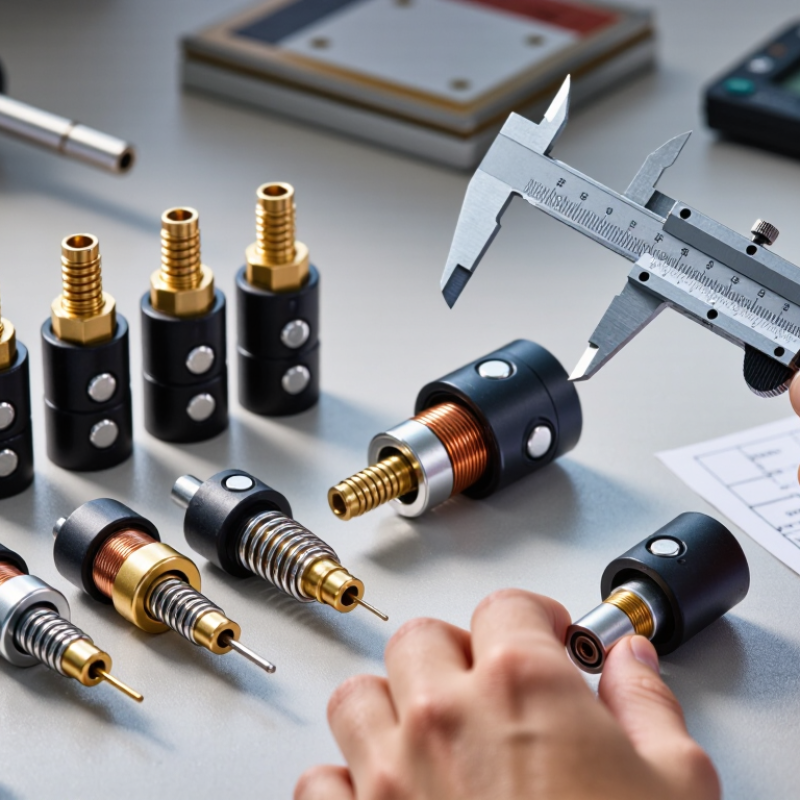
Best Magnetic Pogo Pin Connector Makers in 2026?

What Magnetic Pogo Pin Connectors Are and How They Work

Magnetic pogo pin connectors join two devices through spring-loaded metal contacts and built-in magnets. The magnets guide the mating faces into position; they do not carry the electrical signal. Current flows through conductive pins that compress against matching contact pads. Each pin needs enough travel and spring force to maintain contact without damaging the pad. Small parts, clear roles.

When a watch sits on its charging puck, the magnets help align the surfaces, while the pins make the circuit. Separate pins can carry power and data, depending on the design. Engineers check contact resistance, pin spacing, plating, and the number of mating cycles. Dust, sweat, and slight misalignment can still cause trouble. A connector may feel secure yet lose contact during movement.

Grand View Research valued the global connector market at USD 84.8 billion in 2023 and forecast 5.7% annual growth from 2024 to 2030. That broad market figure is not a forecast for magnetic pogo pins alone, but it reflects growing demand for dependable device connections. In product testing, measure voltage drop under load and inspect contact wear after repeated use. The magnet is helpful, not magic; that distinction is easy to overlook.

How Magnetic Pogo Pin Connectors Work

Magnets help align the two halves. As they meet, spring-loaded pins compress against contact pads to establish an electrical connection. The chart shows this sequence conceptually—not measured performance data.

How to Evaluate Magnetic Pogo Pin Connector Makers

Best Magnetic Pogo Pin Connector Makers in 2026?

How to Evaluate Magnetic Pogo Pin Connector Makers

Evaluating magnetic pogo pin connector makers starts with the actual device, not a catalog photo. Share the required current, operating voltage, mating angle, and available space. Ask for drawings that show pin travel, magnet placement, and dimensional tolerances. Small details matter. A connector that aligns easily on a workbench may shift when a handheld device is dropped or repeatedly docked.

Review test evidence for contact resistance, retention force, and mating-cycle performance. Check whether samples were tested under conditions close to your use case, including dust, moisture, and temperature changes. Ask how the maker controls spring-pin consistency and verifies plating thickness between production batches. Request traceability for materials and inspection records. A sample can perform well, yet production may vary; that risk deserves a direct conversation.

Tips: Test several samples, not just one. Measure resistance before and after repeated mating, and watch for uneven pin movement. Ask for a clear failure-report process and realistic lead times. If specifications are vague, request written limits; a polished sales sheet is not test data.

Leading Magnetic Pogo Pin Connector Makers in 2026

In 2026, leading magnetic pogo pin connector makers are judged by consistency, not polished samples alone. Their products must align cleanly, hold securely, and maintain reliable contact through repeated docking. IDC’s Worldwide Quarterly Wearable Device Tracker reported 534.6 million wearable-device shipments in 2024, a 6.1% increase year over year. That growth raises demand for compact charging interfaces in watches, earbuds, and health devices. Small parts, demanding work.

When comparing manufacturers, request contact-resistance results, mating-cycle data, plating details, and retention-force measurements. IEC 60512-2-1 describes a method for measuring connector contact resistance, giving engineering teams a repeatable test reference. Ask how samples perform after sweat exposure, dust contact, and slight misalignment; real users rarely dock devices perfectly. A glossy sample can still hide uneven pin travel. That is where selection gets messy. Suppliers with documented process controls and traceable test records are easier to evaluate, though paperwork alone cannot prove field reliability. Review actual test conditions, not just headline claims, and confirm that the production part matches the tested sample. A small gap remains between lab results and daily use.

How Makers Differ in Design, Customization, and Production

Magnetic pogo pin makers differ in how they balance contact reliability, magnetic holding force, and compact size. Some focus on standard layouts, while others adjust pin spacing, magnet placement, and housing shape for a specific device. A slim connector may fit neatly into a handheld product, but leave less room for alignment error. Small details matter. Ask how contact resistance and mating cycles are checked, not just what the drawings promise.

Customization also depends on the maker’s engineering process. Useful questions include whether they can review a CAD drawing, recommend pin travel, and test the connector under expected vibration or repeated docking. Materials and plating affect wear and corrosion resistance, so request specifications and test conditions. Pilot builds can reveal misalignment that a screen review misses. Production quality matters too: consistent spring force, clean assembly, and inspection across batches help prevent intermittent connections. This is easy to overlook when comparing only unit prices.

Tips: Share your target current, available space, and expected docking frequency. Request a sample and test it in the real enclosure. Check polarity, alignment, and contact stability after repeated use. A simple fixture helps, though real-world testing is still necessary.

Best Magnetic Pogo Pin Connector Makers in 2026? - How Makers Differ in Design, Customization, and Production

A practical comparison of common supplier profiles. These are industry-level patterns, not rankings or claims about specific companies; actual capabilities vary by product and project.

Supplier Profile Design Approach Customization Production Strength Validation to Request Often a Good Fit For Key Trade-Off
Catalog-focused connector supplier Offers established connector families with defined contact layouts, magnet arrangements, and mating formats. Usually strongest in selecting from existing options; changes to tooling, contact layout, or housing may be limited. Standardized products can simplify repeat purchasing and reduce the need for a fully bespoke design. Confirm the exact part drawing, current and voltage ratings, contact resistance, mating-cycle rating, and environmental limits. Projects that can use a standard footprint and need a straightforward sourcing path. Fit or performance may not match a design that needs unusual spacing, sealing, or mechanical constraints.
Custom interconnect specialist Can develop a connector around the device’s contact count, pitch, magnet position, housing, and mating geometry. Typically supports more design choices, subject to engineering feasibility, tooling, and order-volume requirements. Can be suited to application-specific designs; production readiness depends on process controls and qualification. Ask for tolerance drawings, prototype test results, contact-resistance limits, retention or separation-force data, and reliability-test conditions. Products with a constrained enclosure, nonstandard contact arrangement, or specific mating requirements. Custom engineering and tooling can add cost and development time compared with an existing catalog part.
Integrated connector and contract manufacturer May coordinate connector design with device assembly, cable integration, or related electromechanical components. Customization can extend beyond the connector to the assembled interface, depending on in-house capabilities. Potentially useful when connector supply and downstream assembly need to be managed together. Clarify which processes are performed in-house, how components are traceable, and how changes are controlled between revisions. Programs seeking a combined connector-and-assembly supply route. A broader service offering does not automatically mean the connector itself has better electrical or mechanical performance.
Application-engineering-led supplier Emphasizes selecting or adapting a connector to the operating environment, mating sequence, and device-level requirements. May help translate product requirements into a specification; the amount of physical customization varies. Production capability should be assessed separately from the supplier’s engineering support. Request documented limits for temperature, humidity, vibration, corrosion exposure, and mating cycles relevant to the application. Teams that need help defining requirements before choosing a standard or custom connector. Engineering assistance is valuable, but it should be supported by drawings, test methods, and measurable acceptance criteria.

Selection note: Magnetic pogo-pin connector performance depends on the specific design and test conditions. Compare supplier datasheets using the same criteria, and verify dimensions, electrical ratings, contact resistance, retention force, environmental limits, and cycle-life claims for the exact part under consideration.

How to Choose a Maker for Your Application

Choosing a magnetic pogo pin connector maker starts with the job the connector must do. Define the required current, voltage, contact spacing, mating cycles, and available mounting area. A charging dock used several times daily has different demands from a sealed sensor installed outdoors. Small details matter.

Ask how the maker controls pin travel, spring force, plating thickness, and contact resistance. Request drawings, tolerance data, and test results for the proposed configuration. Magnets can help guide alignment, but they do not correct every positioning error. Check retention force and polarity, too. Then test samples in the actual enclosure, with the real cable and operating load. A tidy bench test can miss the slight tilt users introduce during connection.

Manufacturing consistency deserves close attention. Ask about inspection at incoming, in-process, and final stages, plus how changes to materials or tooling are documented. A clear response is useful evidence; vague promises are not. Also assess engineering support: can the team explain trade-offs and revise a prototype when the fit is wrong? Price matters, but the cheapest quote may leave testing or customization out. I would not assume a polished sample proves every production unit will behave the same. It is easy to overlook. Request a pilot batch and inspect contact performance across multiple units before approving the design.

FAQS

What is a magnetic pogo pin connector?

It uses spring-loaded metal pins and built-in magnets to connect two devices. The magnets guide alignment; the pins carry electricity.

How does current flow through the connector?

Compressed conductive pins touch matching contact pads. Separate pins may carry power and data, depending on the design.

Do magnets guarantee a reliable connection?

No. Dust, sweat, movement, or a slight tilt can interrupt contact. A secure feel can be misleading.

Which specifications should I check?

Check current, voltage, pin spacing, spring force, pin travel, plating, and mating cycles. Also measure the available mounting area.

How should I test a connector sample?

Test it inside the actual enclosure, with the real cable and operating load. Measure voltage drop and inspect wear after repeated connections.

What should I ask a connector maker?

Request drawings, tolerance data, test results, and details about plating and contact resistance. Ask how production changes are documented.

How can I assess production consistency?

Ask about incoming, in-process, and final inspections. A polished sample is reassuring, but it does not prove every unit will behave the same.

What does the market forecast say about magnetic pogo pins?

A broad connector-market estimate valued that market at USD 84.8 billion in 2023, with 5.7% annual growth forecast from 2024 to 2030. It does not describe magnetic pogo pins alone.

Conclusion

Magnetic pogo pin connectors combine spring-loaded contacts with magnetic alignment, allowing devices to connect and disconnect quickly while maintaining electrical contact. Understanding how the pins, magnets, and contact surfaces work helps buyers assess practical factors such as connection stability, current capacity, durability, and suitability for the intended environment. When comparing a Magnetic Pogo Pin Connector Maker, consider engineering experience, material and design options, customization support, quality-control practices, production capacity, and communication throughout development.

Makers may differ in how they tailor connector layouts, pin counts, magnetic strength, sealing, and mounting methods, as well as how they manage samples and larger production runs. The right choice depends on the application’s electrical and mechanical requirements, available space, expected connection cycles, operating conditions, and budget. Clear specifications and early testing can help confirm that a proposed design fits the product before moving forward.


Sienna

Sienna

Sienna is a skilled marketing professional with a deep expertise in our company’s core products and services. With a passion for innovation and detail, she plays a pivotal role in crafting insightful blog posts that not only highlight the unique features of our offerings but also provide valuable......