Choosing the China Best Magnetic Power Connector Manufacturer requires more than comparing unit prices. A dependable supplier must prove electrical safety, magnetic retention, contact durability, and production consistency. The global connector industry already exceeds USD 80 billion in annual value, according to recent Grand View Research market analysis. Demand is rising with wearable devices, smart appliances, medical equipment, and compact industrial systems.
Magnetic Power Connector performance depends on small details. Contact resistance, plating thickness, magnet polarity, cable flexibility, and insertion alignment can change field results. A connector that feels smooth may still overheat under continuous current. Buyers should request test records, including mating-cycle tests, current-temperature curves, salt-spray results, and insulation measurements. UL, RoHS, REACH, and applicable IEC requirements also deserve verification. Certification alone is not enough.
China offers a deep electronics manufacturing base, supported by automated stamping, injection molding, and cable assembly capabilities. However, supplier quality varies widely. Some factories provide impressive samples but weaker batch control. That is an uncomfortable point, yet it matters. The best manufacturer should show traceable materials, calibrated testing equipment, stable lead times, and transparent corrective-action procedures. Industry reports from MarketsandMarkets identify miniaturization and higher reliability as major connector trends. Therefore, supplier selection should focus on application evidence, not advertising language. This guide examines engineering capability, customization, quality systems, export experience, and lifecycle support to identify a credible Chinese Magnetic Power Connector partner. No single factory is best for every application.
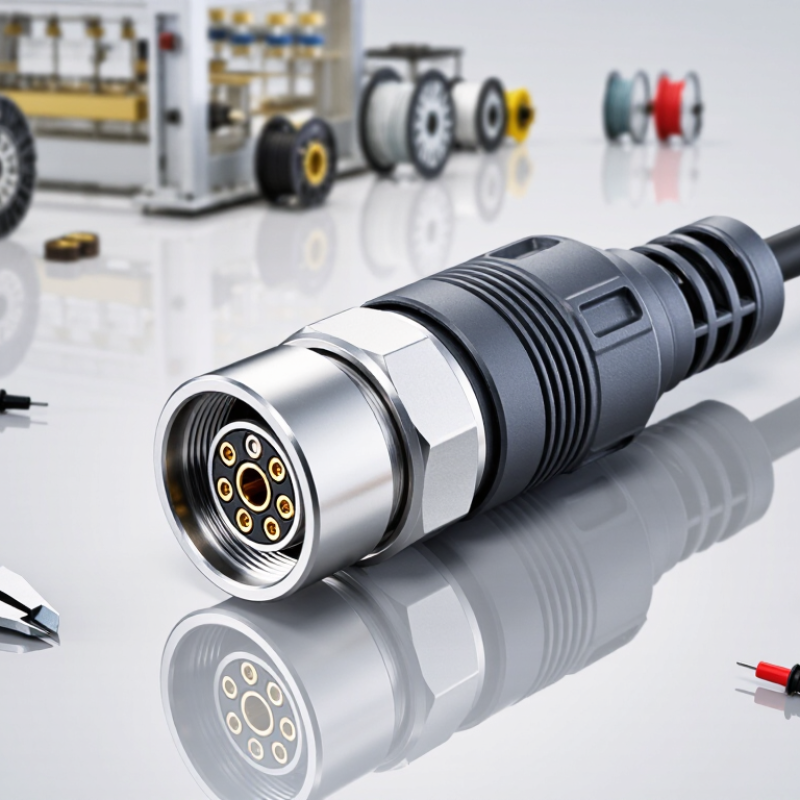
China Best Magnetic Power Connector Manufacturer?
A magnetic power connector joins two electrical contacts through aligned magnets, spring pins, or a compact magnetic interface. It transfers power while allowing quick attachment and release. The fit is deliberate. In practical use, a tablet dock can connect with one hand, while a wearable device avoids a fragile exposed plug. Polarity control, contact pressure, insulation, and thermal performance determine its safety and service life. A connector that feels smooth may still fail under vibration, dust, or repeated insertion.
Industry demand supports careful development. Fortune Business Insights valued the global connector market at approximately USD 84.83 billion in 2023 and expects continued growth through 2032. This figure covers many connector types, not magnetic designs alone. That limitation matters. Magnetic power connectors remain a specialized segment, yet they benefit from wider demand for compact electronics, automated equipment, and easier maintenance. A reliable China-based manufacturer should verify current ratings, mating cycles, contact resistance, and temperature rise through documented testing. The IEC 60512 test series provides widely recognized methods for electrical and mechanical connector evaluation. Factory experience helps, but experience without traceable records is not enough. Some designs still overemphasize magnetic strength. Excessive force can damage small devices or complicate emergency separation. The better approach balances stable alignment, controlled release, waterproof structure, and consistent production tolerances.
China Best Magnetic Power Connector Manufacturer?
Key Features of Leading Chinese Manufacturers
Leading Chinese magnetic power connector manufacturers compete through engineering discipline, not low prices alone. According to Fortune Business Insights’ 2024 connector market report, the global connector market reached about USD 84 billion in 2023. This growth increases pressure on suppliers to prove reliability, traceability, and production capacity.
Strong manufacturers typically use high-conductivity copper alloys, corrosion-resistant plating, and carefully controlled magnetic alignment. A connector should detach safely under accidental pulling, while maintaining stable contact during vibration. Production data matters too. Automated optical inspection, pull-force testing, and repeated mating tests can expose weak solder joints or uneven magnet placement. Small details matter.
They also follow recognized requirements, such as IEC 61984 for connector safety and performance evaluation, where applicable. Quality systems based on ISO 9001 can improve document control and corrective actions, but certification alone proves little. Factory audits should review incoming-material records, batch sampling, failure analysis, and shipment consistency. Some details still need checking.
Technical support is another practical differentiator. Experienced teams provide drawings, tolerance recommendations, thermal data, and sample testing before mass production. They should explain limitations honestly, including current derating, plating wear, and contamination risks. A connector that works on a clean bench may fail in a dusty enclosure. That uncomfortable possibility deserves testing.
The best supplier is therefore not simply the largest factory. It is the manufacturer that links materials, testing, compliance, and transparent communication into repeatable performance.
China Best Magnetic Power Connector Manufacturer?
Materials, Designs, and Electrical Performance
Material selection decides whether a magnetic power connector survives real work. Most reliable designs use copper-alloy contacts with nickel barriers and thin gold plating. Neodymium magnets provide strong alignment, while high-temperature nylon or PBT insulates the housing. In practice, cheap magnets may weaken near heat sources. That detail is often ignored. Bishop & Associates reported worldwide connector sales of approximately US$84 billion in 2023, showing the scale of demand for dependable interconnects. However, market growth does not guarantee quality.
Design must balance convenience with electrical safety. Spring-loaded pogo contacts should maintain pressure after repeated mating cycles. Keyed shapes help prevent reverse polarity. Breakaway coupling can reduce cable damage, but excessive magnetic force may pull a lightweight device from its mount. A qualified supplier should publish contact resistance, rated current, mating-cycle results, and temperature limits. IEC 60512 test methods support more credible comparisons. The USB Power Delivery 3.1 specification allows power levels up to 240 W, yet a magnetic connector must be engineered for its own thermal limits. One rating cannot fit every application.
Tips: Measure voltage drop under the intended load, not only without a load. A connector showing 30 mΩ at room temperature may perform differently after heating. Check contact resistance after hundreds of cycles. Also inspect plating thickness and magnet retention. These tests take time, but skipping them creates expensive surprises. My own evaluation would still question any supplier offering impressive current figures without thermal photographs or test conditions.
Electrical conductivity is a key material indicator for magnetic power connector contacts. The chart shows representative room-temperature conductivity values in % IACS: annealed copper is used as the 100% reference, while brass, phosphor bronze, nickel, and stainless steel provide different balances of conductivity, mechanical strength, corrosion resistance, and durability. Actual connector performance also depends on contact geometry, plating, contact force, temperature rise, and rated current.
A capable magnetic power connector manufacturer starts with controlled materials, not attractive samples. Copper alloy contacts need stable conductivity, while nickel or gold plating resists oxidation. Production should follow ISO 9001 procedures, with traceable batches and documented corrective actions. It should also test connector safety according to IEC 61984 and enclosure protection under IEC 60529 where applicable.
Manufacturing depth matters. Look for precision stamping, automated assembly, controlled overmolding, and consistent magnetic-force testing. A reliable factory should measure contact resistance, insulation resistance, dielectric strength, temperature rise, insertion cycles, and cable pull force. Sample testing is not enough. An independent laboratory can verify critical results. In practice, I would request raw test records, not only a polished compliance certificate.
Durability deserves more attention. The 2024 Global E-waste Monitor reported 62 million tonnes of electronic waste generated in 2022. It projects 82 million tonnes by 2030. Longer-lasting connectors can support repair and reduce premature replacement. That claim still needs evidence. A manufacturer should provide cycle-test conditions, such as load current, operating temperature, and mating frequency. Salt spray and drop tests may reveal weaknesses hidden in ordinary inspections. No factory is perfect. The honest question is whether its process can identify defects early, explain failures clearly, and improve after every production run.
China Best Magnetic Power Connector Manufacturer?
How to Select the Right Chinese Supplier
Selecting a Chinese magnetic power connector supplier requires more than comparing prices. Check whether the supplier understands your voltage, current, connector size, and operating temperature. Ask for drawings, material specifications, and recent test records. A reliable factory should explain contact resistance, magnetic holding force, insertion cycles, and thermal performance clearly.
Request samples from the same production line, not only showroom samples. Test them under real conditions, including repeated connection, cable bending, dust exposure, and continuous power loads. Inspect the plating closely. Uneven surfaces, loose magnets, or weak cable joints often appear after several weeks. Ask how the supplier controls incoming materials, assembly accuracy, and final inspection. Factory audits, process photos, and traceable batch numbers can reveal more than polished presentations.
Do not trust every document immediately. Verify test methods, laboratory details, and measurement dates. An impressive report may not match your actual design. Discuss tooling ownership, sample revisions, packaging, lead times, and corrective actions before placing an order. Clear drawings reduce misunderstandings, especially when tolerances are tight. One overlooked millimeter can create poor alignment and unstable charging.
A supplier may meet specifications yet communicate slowly during a defect investigation. That matters. Use a small trial order to evaluate response speed, consistency, and engineering support. Keep written approval records for every change. Cheap pricing can hide weaker plating, inconsistent magnets, or rushed quality checks. Sometimes, paying slightly more protects the entire project.
| Evaluation Dimension | Recommended Benchmark for Magnetic Power Connectors | Documents or Tests to Request | Suggested Weight | Common Supplier Risk |
|---|---|---|---|---|
| Electrical Rating | The rated voltage and current should meet the application requirement with an appropriate safety margin. The supplier should clearly define continuous current, peak current, contact resistance, and operating temperature. | Product datasheet, current-temperature derating curve, contact-resistance test report, and samples tested under the intended load. | 15% | A connector may achieve its advertised current only under short-duration or laboratory conditions. |
| Magnetic Retention | The magnetic force should be stable during normal use while allowing safe separation when the cable is pulled. Retention must be evaluated with the actual mating geometry and housing materials. | Pull-force test data in newtons, mating-cycle results, orientation tests, and samples with the final magnet grade and pole arrangement. | 12% | Magnet strength can vary because of air gaps, plating thickness, assembly tolerances, or incorrect magnet orientation. |
| Contact Reliability | Contacts should maintain stable electrical performance after repeated mating, vibration, and temperature exposure. Contact plating and spring-contact material should be specified. | Mating-cycle test report, vibration test results, contact-material specification, plating thickness report, and resistance before and after testing. | 13% | Inadequate plating or contact pressure can cause intermittent power loss and increased resistance. |
| Safety and Polarity Protection | The design should prevent incorrect mating where required and should address short-circuit, reverse-polarity, and exposed-contact risks according to the end product design. | Polarity drawings, short-circuit evaluation, insulation design, creepage and clearance data, and product-level safety review. | 12% | Strong magnets do not automatically provide electrical safety or guaranteed polarity protection. |
| Thermal Performance | Temperature rise should remain within the limits defined for the connector, cable, insulation, and surrounding product. Performance should be checked at the maximum specified load. | Temperature-rise test at rated current, thermal images, ambient-temperature conditions, cable-size details, and derating recommendations. | 10% | A connector can overheat when installed in an enclosed product or used with a smaller cable than the test sample. |
| Environmental Protection | The required ingress protection level, corrosion resistance, humidity resistance, and operating-temperature range should match the end-use environment. | IP test report where applicable, salt-spray or corrosion test data, humidity test results, material declarations, and operating-temperature specification. | 10% | An IP rating applies to a defined configuration and installation method, not necessarily to every cable assembly. |
| Quality Management | A documented quality system should control incoming materials, magnet polarity, dimensional inspection, electrical testing, final inspection, and traceability. | Current quality-management certificate, inspection plan, process flow, control plan, nonconformance procedure, and sample inspection records. | 10% | A certificate alone does not prove that connector-specific controls are implemented on the production line. |
| Compliance and Materials | Materials should be suitable for the target market and product category. Compliance evidence should correspond to the exact connector, cable, housing, and plating materials supplied. | Declaration of conformity where applicable, restricted-substance declaration, material composition records, and market-specific test documentation. | 8% | Generic declarations may not cover design changes, alternate materials, or the exact finished assembly. |
| Customization Capability | The supplier should be able to manage connector geometry, cable length, wire gauge, magnet arrangement, housing, labeling, packaging, and tooling requirements. | Engineering drawings, design-for-manufacturing review, prototype schedule, tooling quotation, change-control process, and sample approval record. | 5% | Uncontrolled design changes can affect polarity, current capacity, fit, or magnetic alignment. |
| Supply Capacity and Delivery | Production capacity should be supported by equipment, trained operators, inspection resources, and a realistic lead-time plan for samples, tooling, and mass production. | Capacity statement, production-flow chart, equipment list, sample lead time, standard production lead time, and contingency plan. | 3% | A low quoted lead time may exclude tooling, testing, inspection, packaging, or material replenishment. |
| Commercial and After-Sales Support | The quotation should define specifications, tolerances, tooling ownership, warranty terms, inspection standards, packaging, payment terms, and corrective-action responsibilities. | Detailed quotation, technical agreement, quality agreement, warranty policy, pre-shipment inspection terms, and response-time commitment. | 2% | Unclear commercial terms can make it difficult to claim against inconsistent quality or unauthorized substitutions. |
| Recommended Supplier-Selection Scorecard Total | 100% | Use test results and verified documents rather than price alone. | ||
It joins electrical contacts through magnets, spring pins, or a compact magnetic interface. It supports quick attachment and release. A tablet dock may connect with one hand.
They reduce stress on fragile exposed plugs. A breakaway connection can limit cable or device damage during accidental pulling. Convenience matters.
Reliable designs often use copper-alloy contacts, corrosion-resistant plating, and insulated nylon or PBT housings. Strong rare-earth magnets help maintain alignment. Cheap magnets may weaken near heat sources.
Check rated current, contact resistance, voltage drop, temperature rise, and operating temperature. Test voltage drop under the intended load. No-load results can mislead.
Keyed shapes, controlled magnet placement, and clear polarity design can reduce connection errors. The connector should prevent unsafe alignment. Never assume magnets alone provide protection.
Review repeated mating tests, pull-force tests, visual inspection, and contact-resistance measurements. Inspect the connector after hundreds of cycles. Plating wear may appear slowly.
No. Excessive force can damage lightweight devices or make emergency separation difficult. The better design balances stable alignment with controlled release. More strength is not automatically better.
It may, but the housing needs suitable sealing, insulation, and contamination control. A clean workbench can hide real failures. Test dust, moisture, vibration, and heat together when possible.
Ask for drawings, tolerances, material records, test conditions, thermal data, and sample results. Quality certification helps document processes, but it proves little alone. Traceability matters.
Choosing by advertised current or magnetic strength alone is risky. Compare thermal limits, contact resistance, mating cycles, and actual load conditions. I would still question impressive figures without test photographs or methods.
A Magnetic Power Connector is a practical connection solution that uses magnetic attraction to align and join power contacts, allowing quick attachment, easy removal, and improved user convenience. It is widely suitable for consumer electronics, lighting equipment, medical devices, industrial tools, and other applications requiring reliable power transmission. Leading Chinese manufacturers typically focus on stable magnetic force, precise alignment, compact structures, low contact resistance, and dependable performance over repeated connection cycles. Their products may be customized in shape, cable configuration, contact arrangement, and electrical specifications to meet different equipment requirements.
When evaluating a Chinese supplier, buyers should examine the materials used for magnets, conductive contacts, insulation, and housings, as well as the connector’s current capacity, voltage rating, durability, temperature resistance, and protection design. Quality management, testing procedures, production consistency, and manufacturing capability are equally important. A suitable supplier should provide clear technical documentation, sample testing, customization support, transparent communication, and reliable quality control. Comparing these factors helps purchasers select a Magnetic Power Connector that balances safety, performance, cost, and long-term application needs.

Rongqiangbin