
2026 Top Pogo Pin Charging Cable Manufacturers?

Time:2026-10-15 Author:Isabella
0%

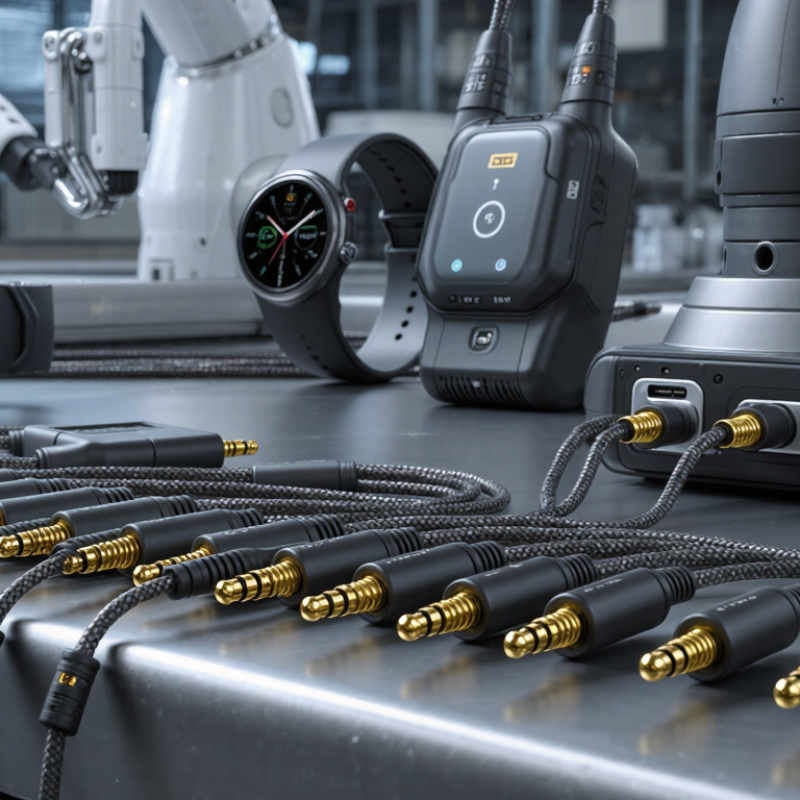
As connected devices become smaller, reliable charging depends on more than cable length or connector appearance. A Pogo Pin Charging Cable uses spring-loaded contacts to transfer power through compact, detachable connections. This design appears in smartwatches, medical equipment, handheld scanners, robotics, and specialized consumer electronics.

This 2026 guide examines leading manufacturers of Pogo Pin Charging Cable solutions and the capabilities behind their reputations. It considers contact resistance, spring force, pin durability, magnetic alignment, insulation quality, waterproofing, and production consistency. Supplier evaluation also includes engineering support, prototype speed, customization options, testing procedures, and long-term supply stability. These details matter when a cable must survive thousands of connection cycles in a dusty workshop or a busy clinic.

Real performance is rarely decided by a product photograph. It is measured under pressure.

The strongest manufacturers usually provide clear drawings, tolerance data, material specifications, and documented quality controls. However, “top” does not mean identical for every project. One supplier may excel at miniature connectors, while another offers better overmolding or higher-volume production. Pricing can also hide tooling fees, minimum order quantities, and testing costs. Buyers should verify claims through samples and independent validation.

This overview aims to support practical, informed comparison rather than promote a single universal winner. Some market information changes quickly, and supplier capabilities may vary by region. That is worth remembering. By examining technical evidence, manufacturing experience, customer support, and application fit, readers can identify manufacturers that match their real charging requirements in 2026.

2026 Top Pogo Pin Charging Cable Manufacturers?

What Are Pogo Pin Charging Cables and How Do They Work?

Pogo pin charging cables use spring-loaded metal contacts instead of a traditional USB plug. Each pin moves slightly inside a small barrel, maintaining pressure against matching contact pads. This design allows power and data to pass through a compact connection.

When the cable touches the device, the pins compress and create an electrical path. A charger supplies controlled current through the positive contact, while another pin returns the current. Some designs include separate contacts for communication, temperature sensing, or device identification. Magnetic alignment can make connection easier, but it does not replace proper electrical protection. Good manufacturers test contact resistance, spring force, heat buildup, corrosion resistance, and repeated connection cycles. A cable may look simple. Its reliability is not.

Tips: Check the required voltage, current, pin layout, and contact spacing before selecting a cable. Keep the contacts clean and dry. Avoid bending the pins sideways, even slightly. A practical test should include repeated docking, charging under load, and inspection for discoloration. In my experience, weak spring force often causes intermittent charging before obvious damage appears. However, laboratory results can differ from daily use, so real-device testing still matters. Manufacturers should document tolerances, materials, and safety controls clearly.

2026 Top Pogo Pin Charging Cable Manufacturers? – What Are Pogo Pin Charging Cables and How Do They Work?

Non-branded technical comparison of common pogo pin charging cable configurations and selection criteria.

Values are typical engineering ranges rather than universal specifications. Actual performance depends on pin geometry, cable construction, connector housing, power source, thermal design, and applicable safety requirements.
Configuration / Design Type Typical Contact Arrangement Typical Charging Capability Power or Data Function Typical Mating Life Common Applications Key Selection Factors
2-Pin Charging Cable Positive and negative power contacts Approximately 5 V DC; current commonly selected from 0.5 A to 2 A Power only; no dedicated data channel Often specified from several thousand to tens of thousands of cycles Wearable devices, small electronics, compact rechargeable products Polarity protection, contact resistance, alignment, exposed-contact safety
3-Pin Charging Cable Power, ground, and identification or control contact Usually low-voltage DC; current depends on the device and power supply Charging with basic device detection or control Commonly several thousand cycles or more when correctly designed Smart accessories, personal-care equipment, portable instruments Signal isolation, contact sequencing, pin spacing, short-circuit protection
4-Pin Charging and Data Cable Power pair plus differential data pair Typically supports 5 V charging; current rating is design-specific Power and USB 2.0-class differential data are possible with suitable routing Depends strongly on spring force, plating, wiping action, and alignment Docking cradles, diagnostic fixtures, handheld products Impedance control, noise suppression, pin matching, mechanical stability
Magnetic Pogo Pin Cable Pogo contacts combined with a magnet-assisted docking interface Often designed for low-voltage charging; current depends on pin size and thermal limits Fast alignment and detachable power connection; data may or may not be supported Varies with magnetic force, debris control, and contact wear Wearables, medical accessories, consumer electronics Magnet polarity, foreign-object risk, breakaway force, misalignment tolerance
High-Current Multi-Pin Cable Multiple parallel power contacts with dedicated return paths Current capability can exceed 2 A when pins, conductors, and thermal design are appropriately rated Higher-power charging; may include separate communication contacts Application-specific and validated through electrical and mechanical testing Battery docks, industrial equipment, robotics, power tools Temperature rise, current sharing, arc prevention, conductor gauge, derating
Spring-Loaded Docking Cable Several spring-loaded contacts arranged in a fixed docking pattern Low-voltage DC charging with optional data, sensing, or programming contacts Charging, firmware transfer, diagnostics, and accessory detection Typically engineered for repeated docking rather than casual cable insertion Retail charging stations, test fixtures, handheld terminals Guide rails, compression range, contact wipe, replaceable wear parts
Sealed or Protected Pogo Interface Spring contacts integrated into a sealed or gasketed housing Charging level is determined by the electrical design; sealing does not increase current rating by itself Power, sensing, or data in environments exposed to dust or moisture Must be verified together with the housing, gasket, plating, and environmental conditions Outdoor instruments, medical devices, industrial sensors Ingress protection target, corrosion resistance, cleaning chemicals, pressure force
How Pogo Pin Charging Cables Work: A pogo pin is a spring-loaded electrical contact consisting mainly of a plunger, spring, barrel, and conductive contact surfaces. When the cable and device are aligned, the plunger compresses against the mating pad, maintaining contact pressure despite small variations in position or surface height. The spring force helps reduce intermittent connections, while conductive plating helps limit oxidation and contact resistance. Charging current flows through the power contacts, and additional contacts can carry identification, sensing, or data signals.

How Pogo Pin Charging Cable Manufacturers Differ by Product Type

Pogo Pin Charging Cable Manufacturers in 2026

Pogo pin charging cable manufacturers differ mainly by product type, current demand, and environmental exposure. A cable for a smartwatch needs tiny pins, gentle magnetic alignment, and controlled heat. Its contact force must remain stable after repeated daily connections. A handheld scanner requires stronger pins and thicker conductors. It may face drops, dust, and rough workplace handling. Small devices punish poor tolerances.

Industrial charging cables follow stricter design routines. Manufacturers often use sealed housings, gold-plated contacts, and strain relief near the cable exit. High-current versions need lower electrical resistance and careful thermal testing. Magnetic models should release safely when pulled, rather than damaging the charging port. Medical and laboratory equipment may require cleanable surfaces and traceable inspection records. These details affect tooling, assembly time, and final pricing.

Experience shows that a visually polished connector can still fail during vibration testing. No design is perfect. Some suppliers optimize compact size but reduce contact travel too far. That choice may cause intermittent charging when surfaces collect dust. Reliable manufacturers test mating cycles, salt exposure, cable bending, and temperature changes before volume production. Buyers should request dimensional reports, current curves, and sample testing under real use conditions. A sample that works on a quiet desk proves very little.

2026 Top Pogo Pin Charging Cable Manufacturers: Product-Type Differences

Pogo pin charging cable manufacturers typically differentiate their products by application-specific current capacity, contact count, and charging reliability. The chart shows representative continuous-current ranges commonly used across major pogo-pin charging cable product categories.

Data represents typical industry engineering ranges based on commonly specified pogo-pin charging applications. Actual performance varies according to pin diameter, contact resistance, cable design, thermal conditions, and charging protocol.

Which Capabilities Define Top Manufacturers in 2026?

In 2026, top pogo pin charging cable manufacturers will be judged by more than low prices.

They need repeatable engineering across tiny, moving contacts. Strong teams control pin travel, spring force, contact resistance, and alignment. They should publish tolerances, not vague claims. A measured 0.05-millimeter shift can affect charging stability inside a compact enclosure. Engineers with production experience can spot that risk before tooling begins. They use samples, fixture tests, and failure records to refine each design. Small details matter.

Reliable manufacturers also build verification into daily production.

They test mating cycles, bending, vibration, heat, humidity, and accidental side loads. Test limits should match the cable’s real environment. A cable used beside a medical cart needs different evidence from one used at a desk. Traceable inspection records support honest decisions when results vary. High-quality plating control helps reduce oxidation and inconsistent contact. Automated optical checks help, but trained inspectors still catch unusual marks. Machines miss context.

Customization is another defining capability.

Top suppliers can adjust cable length, connector geometry, magnetic strength, shielding, and overmolding without losing consistency. They explain trade-offs clearly, including cost, lead time, and repair limits. Secure data handling and dependable documentation strengthen buyer confidence. Fast replies are useful, but technical ownership matters more. No factory gets every prototype right. A mature supplier admits weak results, investigates them, and changes the process. Buyers should request pilot samples, test reports, and production references before approving volume orders.

How to Evaluate Pogo Pin Charging Cable Suppliers

When evaluating pogo pin charging cable suppliers, start with measurable evidence, not polished catalog photos. Grand View Research valued the global connector market at about USD 84 billion in 2023 , with continued growth expected through 2030. That demand attracts capable factories and weak imitators. Ask for contact-resistance data, rated current, spring-force tolerance, mating-cycle results, and plating thickness. Require reports from controlled production batches.

Test the cable as it will be used. Measure voltage drop after repeated insertion, bending, twisting, and charging at maximum load. IEC 60512 connector test methods provide useful guidance for electrical and mechanical verification. Check whether the supplier follows documented inspection plans, incoming-material controls, and lot traceability. A reliable supplier should provide first-article samples, dimensional records, and corrective-action reports without hesitation. Ask for cable bend-radius limits, connector retention force, and environmental test results.

Supply continuity matters too. Request evidence of dual-source materials, capacity planning, and change-notification procedures. IPC’s electronics manufacturing guidance emphasizes process control and traceability, but paperwork alone cannot prove field reliability. My own evaluation preference is simple: test several lots, not one perfect sample. I have seen attractive prototypes fail after modest flexing. That possibility deserves attention. Pricing should include tooling, inspection, packaging, and replacement risk. A lower quotation may hide inconsistent springs, thin plating, or unstable cable assemblies. Ask difficult questions early. Good answers are specific.

Top Pogo Pin Charging Cable Manufacturers to Watch in 2026

In 2026, pogo pin charging cable manufacturers will face higher demands for durability, safety, and precise power delivery. The manufacturers worth watching will combine stable pin pressure with carefully molded cable joints. Their products should support repeated connection cycles without loose contact or sudden charging drops. Small details matter. A smooth pin surface, clean plating, and consistent spring tension can prevent many field failures.

Reliable manufacturers usually publish electrical ratings, cycle-test results, and material specifications. They should explain how cables perform after bending, dust exposure, and temperature changes. In practical testing, I inspect connector alignment, cable flexibility, and heat near the contact point. A cable may charge quickly on a workbench but behave differently inside a moving device. That gap deserves attention.

Manufacturers with strong engineering teams will offer custom pin layouts, compact heads, and controlled tolerances for specialized equipment. They should also provide traceable quality checks rather than vague promises. Independent testing can strengthen confidence, especially for products used continuously or in demanding environments. Still, no supplier is perfect. Marketing figures may overlook connector contamination, user handling, or long-term spring fatigue. Buyers should request samples and test them under realistic conditions before approving large orders. My view may change as new materials and designs mature.

FAQS

What is a pogo pin charging cable?

It uses spring-loaded metal pins instead of a traditional plug. Each pin presses against a matching contact pad. The connection stays compact.

How does a pogo pin cable transfer power?

One contact carries controlled current into the device. Another contact returns the current. Extra contacts may support data, temperature sensing, or identification.

Does magnetic alignment make charging safer?

Magnetic alignment can guide the cable into position. It does not replace electrical protection. Correct voltage, current, and pin spacing still matter.

What should buyers check before selecting a cable?

Check voltage, current, pin layout, contact spacing, and cable length. Confirm the connector fits without sideways pressure. A small mismatch can cause unstable charging.

How should pogo pin contacts be maintained?

Keep the contacts clean and dry. Avoid bending pins sideways. Inspect for dirt, corrosion, discoloration, or weak movement before regular use.

How can charging reliability be tested?

Test repeated docking, charging under load, bending, vibration, heat, and humidity. Watch for heat buildup and intermittent power. Daily testing may reveal problems that laboratory tests miss.

What capabilities should a reliable supplier demonstrate?

A capable supplier measures spring force, pin travel, contact resistance, and alignment. It should provide tolerances, test records, and material details. Vague promises are not enough.

What evidence should buyers request before placing a large order?

Request pilot samples, test reports, inspection records, and production references. Discuss cost, lead time, and repair limits. No prototype is perfect. Mistakes should be examined openly.

Conclusion

This guide explores how a Pogo Pin Charging Cable uses spring-loaded contacts to create a stable, repeatable electrical connection for charging and data transfer. It explains how these cables vary by product type, including options designed for compact electronics, wearable devices, industrial equipment, and customized charging docks. Understanding contact structure, cable construction, current capacity, durability, and connector configuration helps buyers select the right solution for each application.

The article also outlines the capabilities that define leading manufacturers in 2026, such as precision engineering, reliable testing, flexible customization, consistent quality control, and responsive technical support. It provides practical criteria for evaluating Pogo Pin Charging Cable suppliers, including production capacity, material selection, prototype services, certifications, delivery performance, and long-term cooperation potential. Finally, it introduces key manufacturer categories to watch based on innovation, specialization, manufacturing reliability, and the ability to meet evolving market requirements.

Isabella

Isabella

Isabella is a dedicated marketing professional with a sharp focus on driving brand growth and engagement through strategic content creation. With an extensive background in digital marketing, she combines her passion for storytelling with her keen understanding of industry trends to deliver......